
 Back to Index

MOMENTUM AiR
Curatorial Residency
Olga Shishko
 |
|
9 January – 26 February 2026
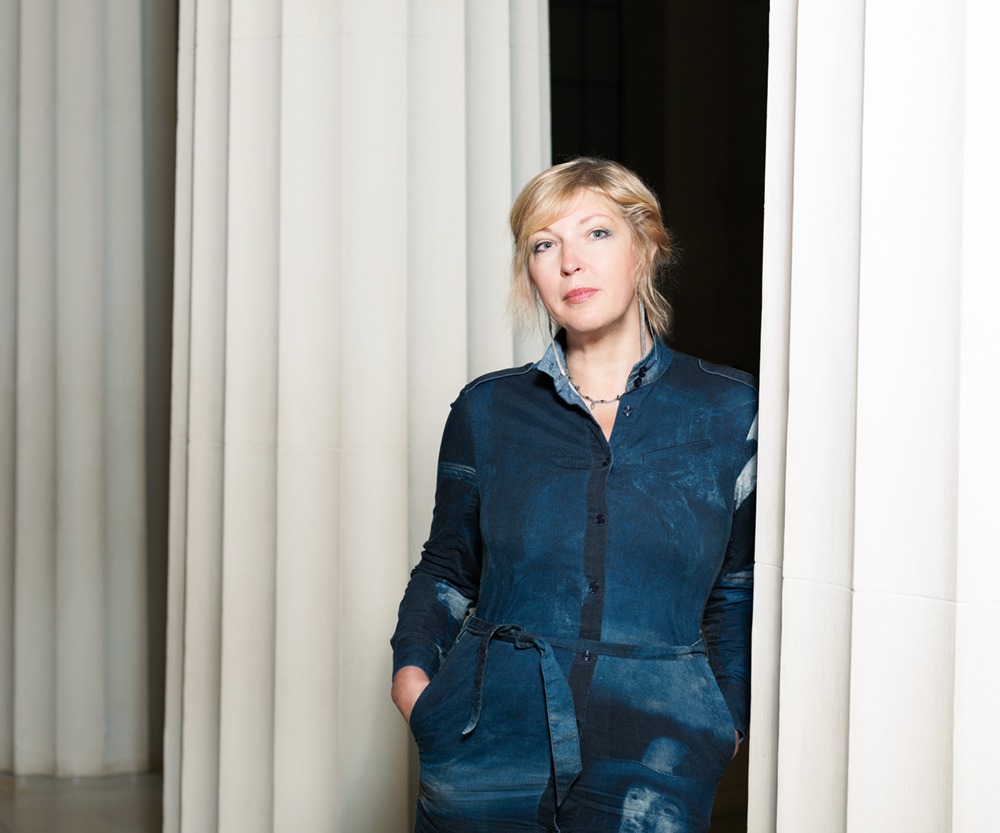
CURATOR BIO
Olga Shisko (b. 1967) is a curator, media art specialist and researcher, and Founding Director of the MediaArtLab Center for Culture and Art, which was created in 1998 and has been part of Ca Foscari University (Venice) since 2023. Currently, Shishko is a PhD candidate in Heritage Science at the Sapienza University of Rome (Italy), working with the Media Art Lab Archive to research media art in Eastern Europe after the fall of the Berlin Wall. Shishko lives and works in Venice, Italy.
Having previously completed her degree in Art History at the Moscow State University, Russia (1988–1992), Olga Shishko has directed major cross-disciplinary initiatives, curated large-scale exhibitions, and managed leading international institutions at the intersection of contemporary art, media theory, and moving-image culture, including: Moscow International Film Festival, Founder and Curator of the Media Forum Program (2000–2015); Museum of Screen Culture – Manege / MediaArtLab, Moscow, Founder and Director (2012–2015); Museum Exhibition Complex Manege, Moscow, Deputy Director for Innovations in Contemporary Art (2013–2015); The Pushkin State Museum of Fine Arts, Moscow, Head of the Department of Cinema and Media Art, Chief Curator of the Pushkin Museum XXI Contemporary Art, Curator of the Collection of Cinema and Media Art (2016–2022); Mapping Diaspora, Curatorial Advisor (2022-present); CIFRA Platform for Media Art, Head of Art Department and Chief Curator (2023-present).
Olga Shishko is the curator of numerous exhibitions, including: “Bill Viola. Journey of the Soul”, Pushkin State Museum of Fine Arts, Moscow, 2021; “There is a Beginning in the End. The Secret of Tintoretto’s Fraternity”, Chiesa di San Fantin, Venice, 2019; “Man as a bird. Images of journeys”, Palazzo Soranzo Van Axel, Venice, 2017; “The Golden Age of the Russian Avant-garde” (with Peter Greenaway), Manege Museum, Moscow, 2014; amongst many other significant exhibitions.
Major awards include: Recipient of The Innovation Prize, Russia — Curator of the Year, 2021; Shortlist Nominee of The Innovation Prize, Russia — Project of the Year, 2017; Recipient of The Innovation Prize, Russia — Theory, Art Criticism, Art History, 2016; Recipient of The Art Newspaper Russia Award — Project of the Year, 2015; Shortlist Nominee of The Innovation Prize, Russia — Theory, Art Criticism, Art History, 2014; Shortlist Nominee of The Kandinsky Prize, Russia — Scientific Work, History and Theory of Contemporary Art, 2014; Shortlist Nominee of The Innovation Prize, Russia — Curator of the Year, 2010.
Olga Shishko is currently the Head of the Art Department and Chief Curator of CIFRA Platform for Media Art. CIFRA is a platform and global community for experiencing and streaming contemporary art — from video and sound to dance films, glitch art, game art, and beyond. Featuring curated selections by leading international curators, CIFRA offers thematic playlists and editorial programs that guide viewers through the most relevant and thought-provoking works of today. Right now, new artists are joining every week, new playlists are going live, and viewers across 113 countries are discovering powerful works in over 75 genres. CIFRA’s growing archive includes 2,780+ artworks by 1,299 artists — and a global community of over 15,000 art lovers is already here. Tune in, explore, and be part of what’s shaping the future of art — live on CIFRA.
MORE INFO ON CIFRA HERE
RESIDENCY PROJECT
The history of media art in Central and Eastern Europe
from the fall of the Berlin Wall
Curatorial research towards a PhD in Heritage Science at the Sapienza University of Rome, Italy
My research explores the history of media art in Central and Eastern Europe from the fall of the Berlin Wall to the present, tracing how artists and institutions confronted accelerated political change, historical trauma, and the unstable memory of socialism. The project argues that media art in this region emerged not as a derivative of Western models, but as a laboratory where video, performance-for-camera, and networked practices developed specific strategies to make history visible and debatable.
Four conceptual nodes structure the analysis: estrangement (ostranenie) as a video-art method that disrupts perception; montage as politics of the body, where editing and performance collide to expose memory in lived time; funerals of the past, in which artists stage the work of mourning and postmemory; and archives as active infrastructures, from SCCA centers and WRO to MediaArtLab and Momentum archive. These archives do not simply preserve but continuously reframe artworks, generating what Ariella Aïsha Azoulay calls “potential histories.” The central hypothesis is that the media-art archive functions not only as a repository of facts but as an active instrument of historical reconfiguration, where the past undergoes montage, falsification, and reinterpretation. The research is organized around five conceptual nodes.
Methodologically, the project combines close readings of works with institutional and archival research, embedding curatorial practice itself into the analysis. Theoretical frameworks include Shklovsky’s estrangement, Eisenstein’s montage of attractions, Groys’s reflections on art and power, Azoulay’s critique of the archive, Manovich’s database aesthetics, Hirsch’s concept of postmemory, and Steyerl’s geopolitics of circulation. This constellation allows me to treat media art both as an art-historical field and as a political practice of reconfiguring memory.
The relevance of the project today lies in showing how the post-socialist region anticipated global debates around fake, fiction, and algorithmic simulation. By foregrounding the archive as a living and contested arena, and by situating Central and Eastern European media art within broader circuits of circulation and resistance, the dissertation repositions the region as a methodological core rather than a periphery of media history.