
 Back to Index
MOMENTUM AiR
Curatorial Residency
Nermin Saybaşılı
1 October – 27 December 2026
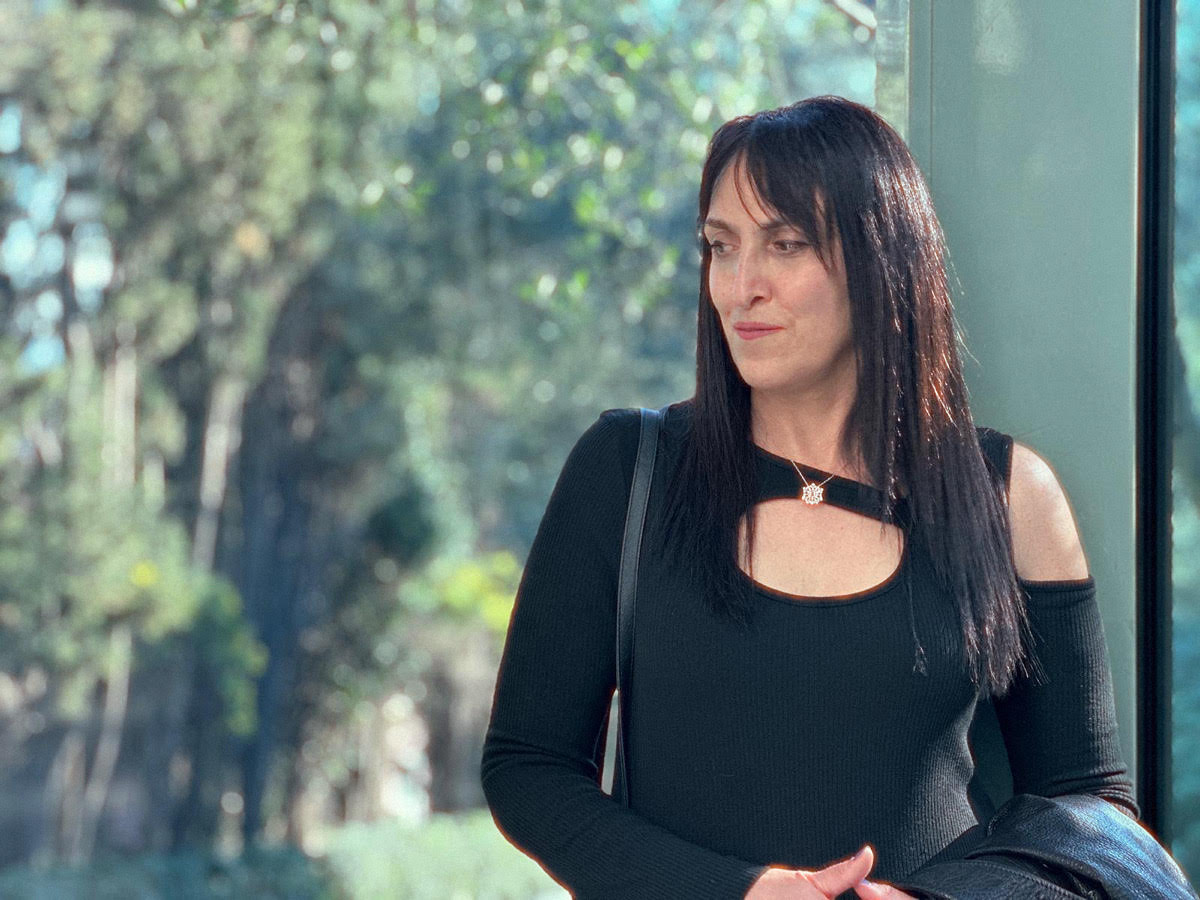
BIO
Nermin Saybaşılı is a Professor in the Department of Art History at Mimar Sinan Fine Arts University. She received her PhD in Visual Culture from Goldsmiths, University of London. She has held visiting positions at the University of Edinburgh (Department of Architecture and Landscape Architecture, 2004–2005) and at Columbia University’s School of the Arts as a Fulbright Visiting Scholar. Her research focuses on contemporary art practices and critical theory, with particular emphasis on visibilities and invisibilities within regimes of vision; sound and voice in installation and video art; Contemporary art in Turkey in relation to magical politics, in contrast to contemporary forms of myth-making; mobility and counter-geographies; and urban space and migration in networked culture. Her work has been published internationally in journals, books, exhibition catalogues, and magazines.
She has been involved in numerous art projects, including Becoming Istanbul, De-Regulation with the Work of Kutluğ Ataman, Going Public’06, and e-flux video rental (EVR). She is the author of four books in Turkish: Borders and Ghosts: Migratory Hauntings in Visual Culture (Metis, 2011); Art on Site: Ethnographic Knowledge in Visual Culture Studies (Metis, 2017); Magnet-Sound: Resonance and the Politics of Art (Metis, 2020); and Namrun through Pine Needles (2023). In 2025, she was awarded the Art Writer of the Year Prize by the Art History Association of Turkey. She also served as a consultant for the Istanbul 2010 European Capital of Culture project and is a member of AICA-Turkey (International Association of Art Critics).
PROJECT DESCRIPTION
Curatorial research for a visiting professorship at the UdK – Universität der Kunste Berlin
In our current political moment, it is increasingly clear that we live not under true democratic conditions but within the illusion—the fiction—of democracy. Deception and concealment, now branded as “perception management,” have become the defining strategies of contemporary political life. We are living in what Bülent Diken calls a world of “legitimized despotism”. Diken incisively writes, “we are not only deprived of the real—ours is not merely a ‘post-truth’ age—but also of the fiction”1. According to him despotism functions like a magic trick—one that reinvents itself while leaving no trace2. “Its magic”, so to speak, lies in its ability to continually recast itself—to produce variation within repetition, masking continuity under the guise of novelty.
Then the question arises: How can we articulate the public nature of art? To put it differently, how might art function as a key category for imagining an alternative “political imaginary”—one in which relational, historically situated struggles open up different temporalities and spatialities beyond the impasses of neoliberalism and geopolitical relations? In a time where authoritarian regimes manipulate visibility, obscure truth, and manufacture consent through overwhelming visual control, I strongly believe that the magical—as a conceptual and aesthetic strategy—offers powerful tools for subversion, invention, and resistance.
In the modern world, visual media and spectacle operate in the same way as the dominance and sovereignty of linguistic activities (speech, writing, textuality and reading). The illusionist world on which “a culture of presences” is based upon, which has become corporeal through the hegemony of the visible, does not merely conceal the critical potential of the art object that is truly prone to magic and alchemy, but also ignores it. If we are talking about intellectual and academic activity today, it is necessary to emphasize that meaning should not be confined to linguistic or visual representations. I believe that magic operates as a critical and experimental practice, as well as a visionary mode of thinking and making. Like magic, art alters not just what we see, but how we see. It operates as a transformative field, producing new experiences and reorganizing the frameworks through which meaning emerges. Magic works through relations and transformations, through imagination, intuition, and sensory disruption. It does not reduce reality; it recomposes it. It engages the poetic, the spiritual, and the speculative—opening portals across all possible worlds of the senses and the sensible.
In my ongoing research project, tentatively titled “The Artist and the Magician, or The Public Nature of Art in Our Times,” two personas—the artist and the magician—serve as the central figures of my inquiry. At times opposing and distant, at others closely entangled and relational, they move through the project as both protagonists and, occasionally, anti-heroes. Their shifting positions and encounters will provide the framework through which the broader discussion unfolds.
The magician is a figure suspended between extremes. They can be a despot, wielding magical (mis)perceptions to manipulate belief and obscure reality. But they can also be an artist, in search of new ways of perceiving and expressing the world—an agent of magical perception rather than manipulation. In this way, magic must be understood as the power of fiction—a force that, paradoxically, often leads to disenchantment. Its function is not to obscure meaning, but to ritualize and render visible the latent desires, fears, and gestures of a collective world. A Thousand Plateaus, Gilles Deleuze and Felix Guattari have conceptualized writer as “sorcerer “who is an exceptional individual (“anomalous”) outside rules or goes against the rules by haunting the fringes. The artist as magician re-frames times and re-people spaces, as “magical thinking” involves a different structuring of the universe, one that invariably involves a different sense of both time and space.
By magic, I refer to a radical aesthetic mode. I will argue that artist-magician stages a conflict between different regimes of seeing, and generate sensible forms that construct shared spaces—not symbolic spaces of power, but spaces of encounter, friction, and possibility. They can disrupt dominant narratives, perform gestures of freedom, and reconfigure the visible landscape of public life. Their practices question the very foundation of meaning, image, and collective belonging. In the age of abracadabra, art may not possess a magic wand, but it does retain forms of magic and alchemy capable of deciphering formal and informal networks. To make art today is to engage in a political act—not by illustrating facts, but by staging new forms of life, new ways of inhabiting the world, new rhythms of time, and new ways of being together.
Nermin Saybaşılı
Istanbul, June 2026.