

 Back to Index
SERGEY KISHCHENKO
(b. 1975 in Stavropol, Russia. Lives and works in Venice, Italy.)
Sergey Kishchenko is an interdisciplinary artist based in Venice, working across performance, video, photography, installation and media art. His practice investigates memory, migration, ecology and the transformation of cultural identities in contexts of displacement, while critically examining the democratic ideals, illusions and myths that shaped post-Soviet Russia and their contemporary reinterpretations.
Originally trained in Theatre Arts and the Economics of Culture, Kishchenko studied acting and production at the Russian University of Theatre Arts (GITIS) in Moscow before fully dedicating himself to artistic practice. He continued his education at the Institute of Contemporary Art (ICA) and the MediaArtLab Open School in Moscow, and completed an internship at Goldsmiths, University of London. He has also participated in international residencies, including residency.ch in Bern, Switzerland.
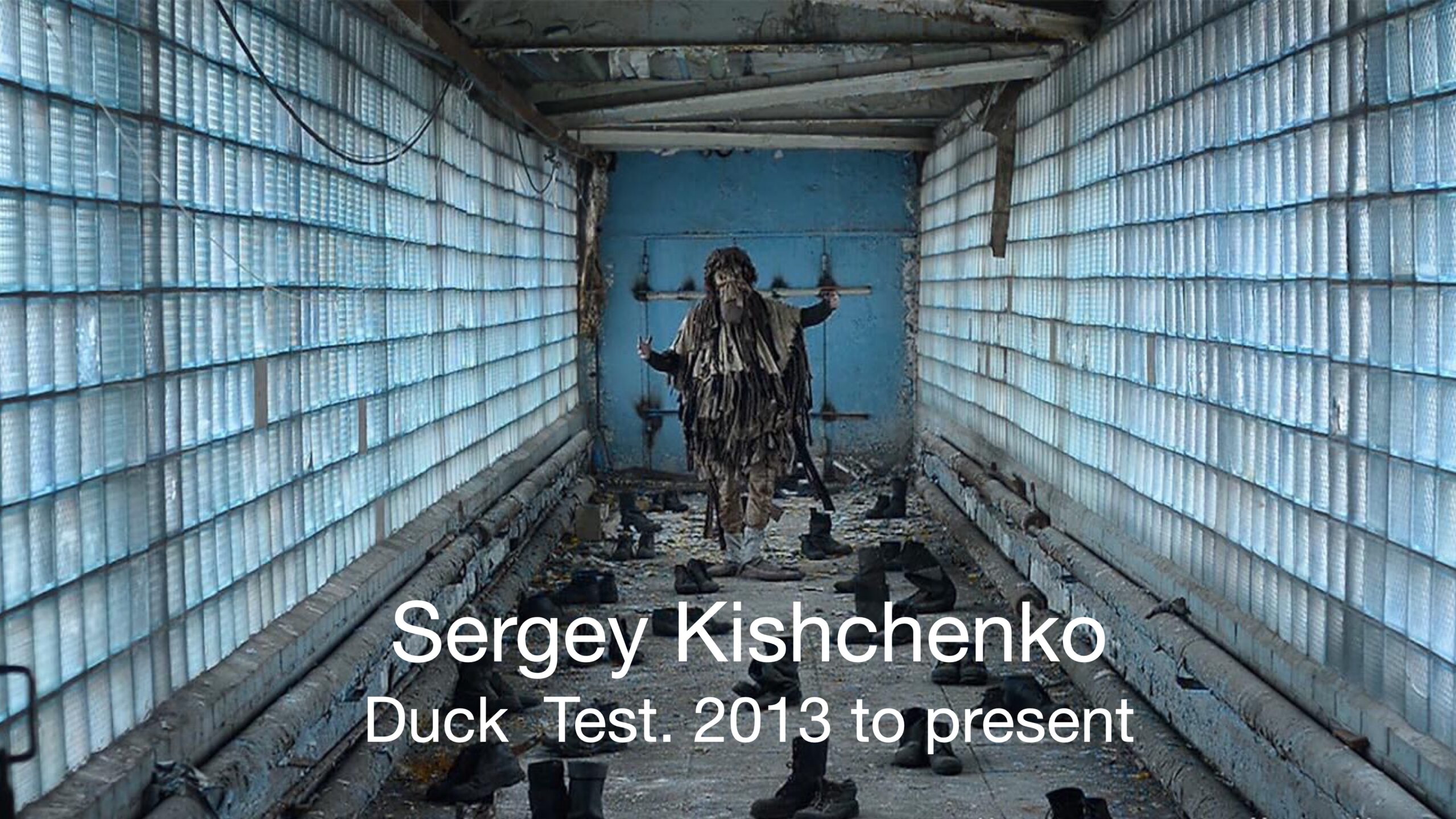
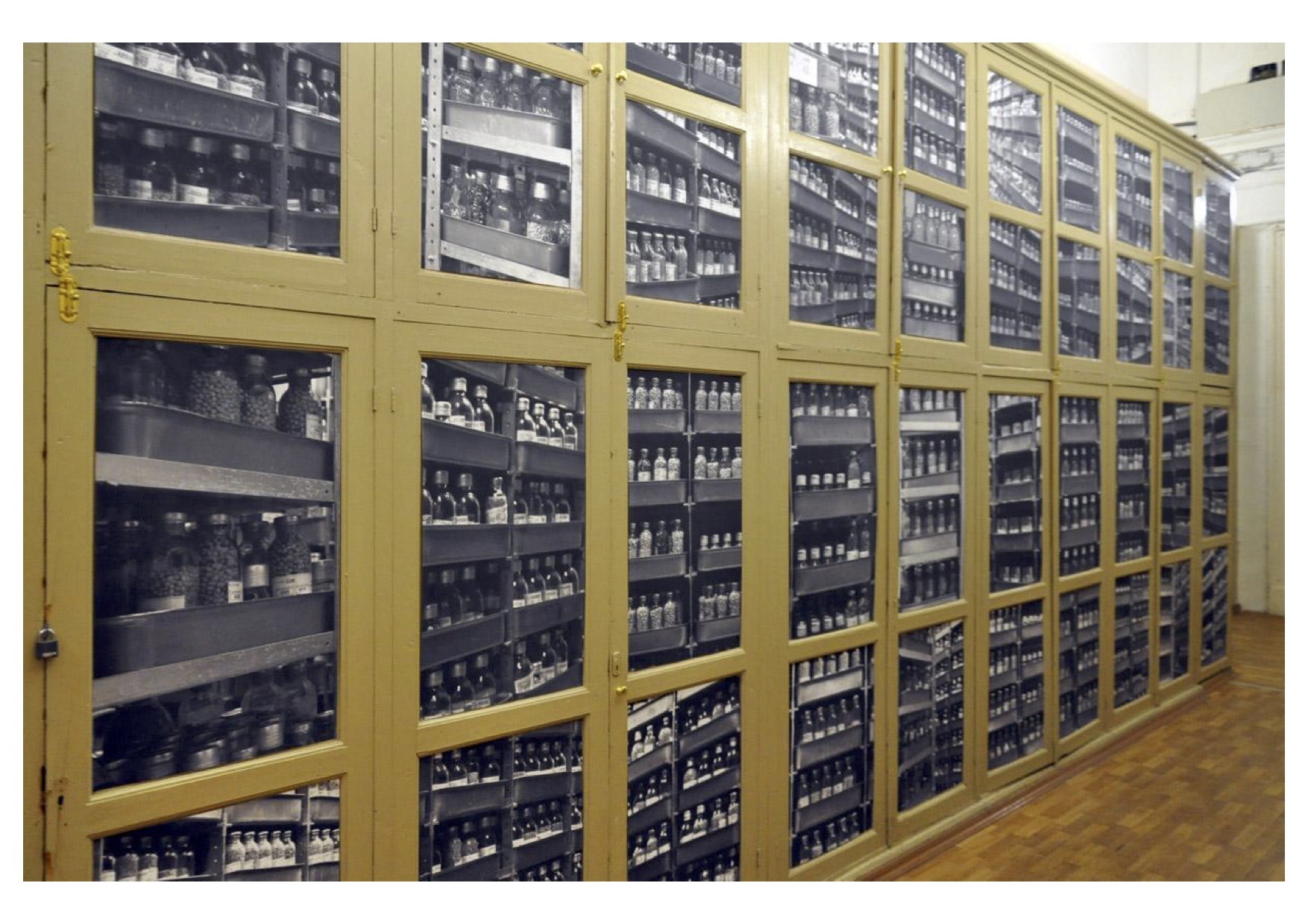
Kishchenko constructs immersive environments using a wide range of materials, merging performance with visual and media-based practices. His long-term projects—such as Duck Test, Observation Journal, and Temple of Venus—explore the porous boundaries between personal narrative, historical archives and speculative mythology. Through these works, he challenges viewers to reassess inherited cultural symbols and to reflect on their relationship to contemporary mythology and media reality.
For Kishchenko, art operates as a field of knowledge: it is embedded in art history and theory, yet remains subjective and irrational, activating what he describes as “second-order feelings.” His works function less as fixed outcomes than as stages within an ongoing cognitive and communicative process, engaging with the circulation of images, signs and values in a global media landscape.
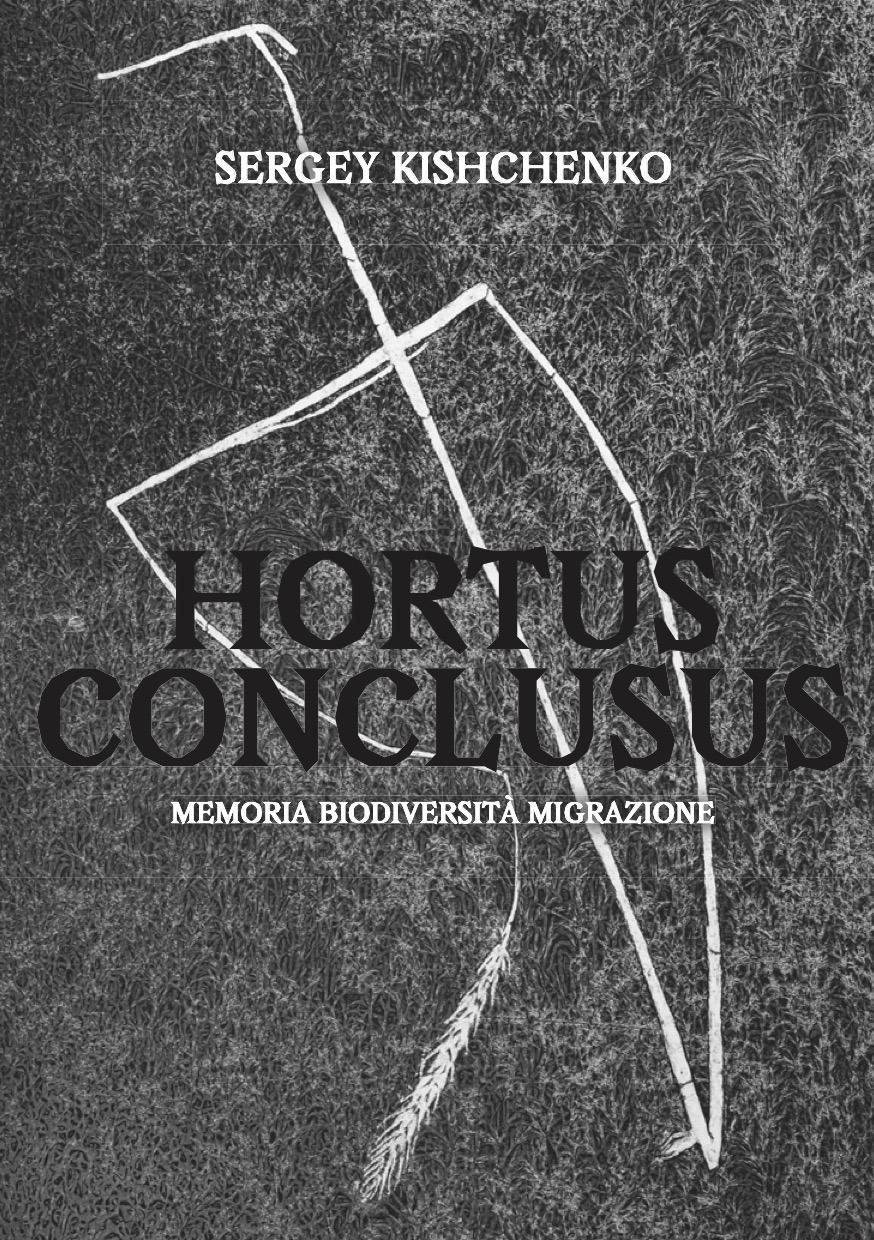
His recent solo exhibitions and performances include Hortus Conclusus at the Academy of Fine Arts of Venice (2023), Venetiae: Quintum Corpus at ArtNight Venezia (2023), and Duck Test. Who is Guilty? and What to Do? (ArtNight Venezia, 2023). Earlier projects were presented at the Moscow House of Dostoevsky Museum Centre (2021), the Russian State Library – Lenin Library (Innovation Art Prize Nominees Exhibition, 2018), the N. I. Vavilov Institute of Plant Genetic Resources (St. Petersburg, 2017), Garage Museum of Contemporary Art (Moscow, 2019), the Pushkin State Museum of Fine Arts (Moscow, 2020), Universalmuseum Joanneum (Austria, 2016) and Graz Museum (2015). He has participated in group exhibitions and festivals across Europe, including at the Pushkin State Museum of Fine Arts (2021), ZOMIA Space (Vienna, 2019), the Austrian Cultural Pavilion (Plovdiv, 2019) and the Krasnoyarsk Museum Biennale (2017).
He was shortlisted for the Innovation Art Prize (2018) and the Moscow Art Prize (2020), and received the Sergei Kuryokhin Award (2018). In 2022, opposing the war initiated by the Russian Federation, Kishchenko left Russia. He currently lives and works in Venice, Italy.
Duck Test No.5 (Displacement)
2014–2023, Video Performance, 11 min 40 sec
The Duck Test is a long-term artistic project by Sergey Kishchenko, which is based on the well-known principle of abductive reasoning: ‘If it looks like a duck, swims like a duck and quacks like a duck, then it is probably a duck.’ In Kishchenko’s work, the duck is not a character, but a testing device – a hybrid figure through which historical roles, ideological positions, and personal biographies are explored and examined. For the artist, the Duck Test has become a fundamental approach to thinking about art and examining what it means to be an artist. Each iteration is a new configuration of this method, not a sequel. The numbering does not follow a linear chronology, but rather reflects a constellation of experiments unfolding across different temporal and geographical contexts.
While Duck Test No. 4 (Cherry) focused on the collapse of industrial and political utopias within the ruins of the ZIL plant in Moscow, Duck Test No. 5 (Displacement) shifts the focus to the contemporary issue of migration and the unstable reconstruction of the self.
In this piece, the protagonist – a Duck-man hybrid – appears on the deserted coastline of Lido Island. Carrying a suitcase, he moves along the sea dyke and the narrow strip of land between the water and the shore, as if entering a territory that is both real and mythological. The familiar landscape of dunes, wind, military remnants and the Adriatic horizon is transformed into a threshold space: a zone of arrival and uncertainty where identity must be renegotiated.
In this work the Duck is no longer a detached observer wandering through historical ruins. It arrives as a displaced subject, echoing the trajectories of countless migrants crossing seas and borders. However, the narrative avoids documentary realism. Instead, the journey unfolds as a layered temporal experience: each step along the shore triggers fragments of memory, previous lives, and imagined pasts. The Duck carries not only a suitcase but also a multiplicity of identities accumulated across different historical and personal timelines. The movement from the empty coastline toward Venice introduces a subtle theatrical dimension. Venice appears not as a picturesque destination but as a stage where histories overlap: a former maritime empire, a museum-city, a contemporary refuge. Entering its urban fabric, the Duck becomes both performer and witness, moving between visibility and anonymity. The city functions as a living archive, absorbing the presence of the newcomer while simultaneously dissolving it.
Displacement here is understood not only as geographic relocation but as an existential condition. The work reflects on what happens to subjectivity when familiar cultural and linguistic frameworks collapse. The Duck – indeterminate and ambiguous – embodies this instability. Its hybrid form allows it to inhabit multiple roles: migrant, actor, memory-carrier, and observer of its own transformation. Through this figure Kishchenko continues his exploration of the “duck test” as a method of examining identity: if something appears to belong somewhere, does it truly belong?
Sound and visual rhythm reinforce the sense of temporal layering. The landscape of the Venetian lagoon becomes a resonant surface onto which personal and collective memories are projected. Past and present coexist without clear boundaries, suggesting that displacement produces not a linear narrative but a constellation of overlapping temporalities.
Duck Test No. 5 (Displacement) thus shifts the focus of the series toward the contemporary experience of migration and self-reconstruction. It is not a documentary about exile, but a poetic reflection on the condition of living between geographies and identities. By situating the Duck at the intersection of personal history and global movement, the work proposes displacement as a space of transformation a state in which the subject is continuously reassembled through memory, movement, and the act of crossing borders.
Hortus Conclusus Art Exhibition in Venice (2023)
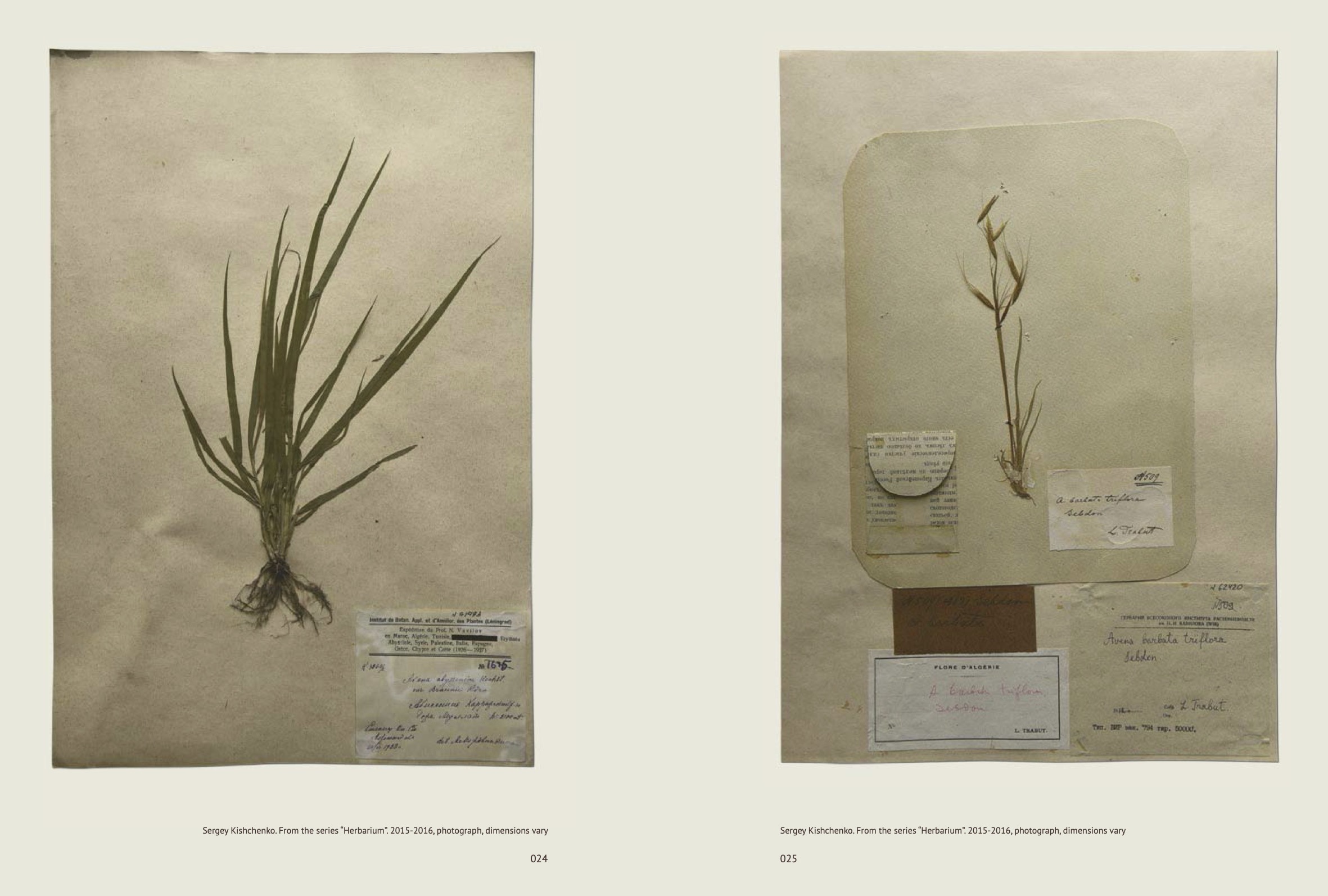
Observation Journal 2014–2017
|
DOWNLOAD HERE SERGEY KISHCHENKO’S PORTFOLIO
|
 |
|
DOWNLOAD HERE THE OBSERVATION JOURNAL 2014–2017
|
|
|
DOWNLOAD HERE THE OBSERVATION JOURNAL 2015–2016
|
|
|
DOWNLOAD HERE HORTUS CONCLUSUS CATALOGUE
|
|